-
Transformative Applications of Artificial Intelligence in the Financial Sector
Introduction:
The financial industry has undergone a profound transformation with the integration of Artificial Intelligence (AI) technologies. From wealth management to decision-making, financial compliance to credit scoring, and beyond, AI is reshaping the way financial institutions operate. In this article, we explore various use cases of AI in finance, highlighting its impact on key areas and discussing the benefits it brings to the sector.
AI in Wealth Management:
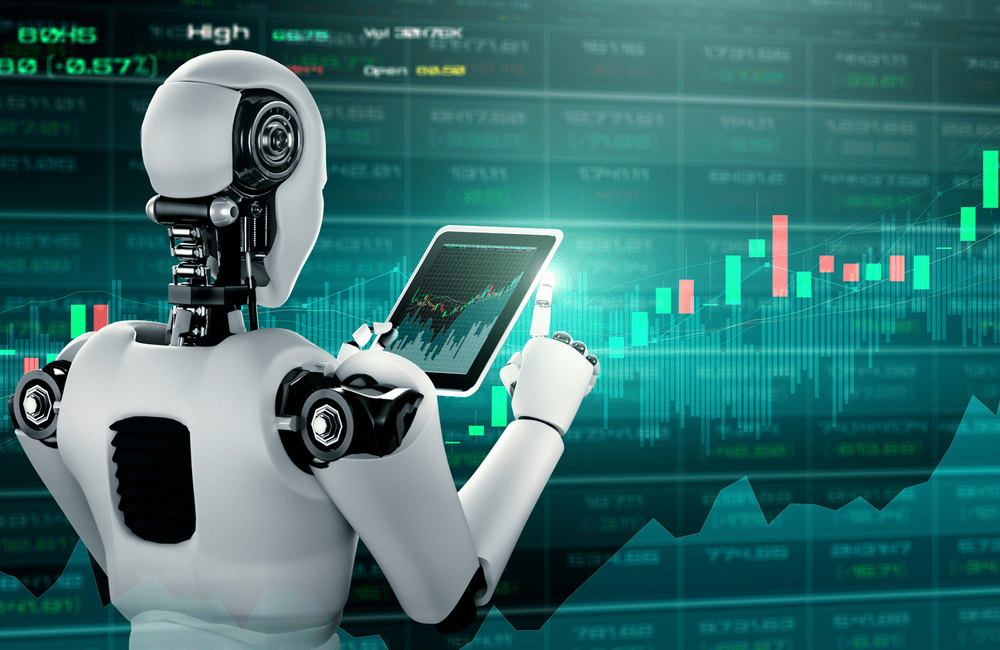
Wealth management has witnessed a paradigm shift with the infusion of AI technologies. Machine learning algorithms analyze vast datasets to identify investment opportunities, optimize portfolios, and personalize financial advice. AI-driven robo-advisors have gained popularity, offering cost-effective and efficient wealth management services to a broader audience. By considering market trends, risk profiles, and individual goals, AI in wealth management ensures more informed and tailored investment strategies.
AI in Decision-Making:
In the dynamic world of finance, quick and accurate decision-making is crucial. AI plays a pivotal role by providing real-time insights and predictions based on historical data and market trends. Traders and financial analysts leverage AI algorithms to assess risks, identify patterns, and make informed decisions. The speed and precision offered by AI in decision-making tools enable financial professionals to stay ahead in volatile markets, ultimately enhancing overall performance.
AI in Financial Compliance:
Regulatory compliance is a cornerstone of the financial industry, and AI in financial compliance is proving to be an invaluable tool in ensuring adherence to complex regulations. Machine learning algorithms can efficiently monitor transactions, detect anomalies, and identify potential instances of fraud. By automating compliance processes, financial institutions can reduce the risk of regulatory breaches and streamline their operations, ultimately fostering a more transparent and accountable financial environment.
AI-Based Credit Scoring:
Traditional credit scoring models often rely on historical financial data, leading to potential biases and inaccuracies. AI based credit scoring is revolutionizing the process by incorporating a broader range of data points and utilizing advanced algorithms. Machine learning models assess not only financial histories but also non-traditional factors such as social media behavior and transaction patterns. This holistic approach enhances the accuracy of credit assessments, allowing lenders to make more informed lending decisions and expanding access to credit for a diverse range of borrowers.
AI in Accounting and Auditing:
Integration of AI in accounting and auditing has streamlined these processes. Automation of routine processes, such as data entry and reconciliation, allows financial professionals to focus on more strategic and complex aspects of their roles. AI-powered tools can also analyze large volumes of financial data for anomalies and inconsistencies, reducing the likelihood of errors. This not only enhances the efficiency of financial operations but also ensures greater accuracy and reliability in financial reporting.
AI in Financial Modeling:
Financial modeling, a critical aspect of strategic planning and forecasting, benefits immensely from AI applications. Machine learning algorithms can analyze historical data, market trends, and various influencing factors to create more accurate and dynamic financial models. This enables organizations to make more informed projections and assess the potential impact of different scenarios on their financial performance. The use of AI in financial modeling enhances decision-making processes, aiding in better risk management and strategic planning.
AI in Financial Planning:
AI in financial planning, through ai driven tools empowers individuals to take control of their financial future. These tools analyze personal financial data, spending patterns, and goals to provide personalized recommendations for budgeting, saving, and investing. Virtual financial advisors equipped with AI capabilities offer users real-time guidance, helping them make sound financial decisions aligned with their objectives. By making financial planning more accessible and personalized, AI contributes to financial literacy and empowers individuals to achieve their financial goals.
Conclusion:
Artificial Intelligence is reshaping the landscape of the financial industry, bringing forth innovative solutions and optimizing various processes. From wealth management to decision-making, compliance to credit scoring, accounting to financial modeling, and financial planning, AI is a transformative force driving efficiency, accuracy, and strategic decision-making. As the financial sector continues to evolve, embracing AI technologies will be essential for staying competitive and meeting the demands of a rapidly changing landscape.
-
Revolutionizing Manufacturing Operations: The Pivotal Role of Artificial Intelligence
Introduction:
In the contemporary landscape of manufacturing, Artificial Intelligence (AI) has emerged as a transformative force, optimizing processes and unlocking unprecedented efficiencies. This article delves into the multifaceted applications of AI in manufacturing, spotlighting its pivotal role in predictive maintenance, inventory management, production planning, and procurement.

AI in Predictive Maintenance:
Predictive maintenance is a critical aspect of manufacturing, aimed at minimizing downtime and reducing operational costs. AI has revolutionized this field by leveraging advanced analytics and machine learning algorithms. Instead of traditional scheduled maintenance, AI enables real-time monitoring of equipment and machinery, predicting potential failures before they occur. This proactive approach enhances overall equipment effectiveness (OEE) and ensures continuous production.
Case Study: A leading automotive manufacturer implemented AI in predictive maintenance system, analyzing sensor data from production equipment. The system accurately predicted equipment failures, allowing the company to schedule maintenance during planned downtime, resulting in a significant reduction in unscheduled outages and maintenance costs.
AI in Inventory Management:
Effective inventory management is crucial for optimizing supply chain operations and ensuring product availability. AI brings predictive analytics and automation to the forefront, enabling manufacturers to forecast demand with greater accuracy and maintain optimal inventory levels. Machine learning algorithms analyze historical data, market trends, and even external factors, providing insights that facilitate informed decision-making in inventory planning and procurement.
Case Study: A consumer electronics company utilized AI in inventory management to optimize stock levels for various components. By integrating AI algorithms with supply chain data, the company reduced excess inventory, minimized stockouts, and improved overall supply chain efficiency, resulting in significant cost savings.
AI in Production Planning:
AI in production planning is a game-changer for manufacturers striving to enhance efficiency and responsiveness to market demands. Machine learning algorithms analyze historical production data, market trends, and other relevant factors to generate accurate production schedules. This not only ensures optimal resource utilization but also enables manufacturers to adapt swiftly to changing market dynamics.
Case Study: A pharmaceutical company integrated AI into its production planning process to accommodate fluctuating demand for various drugs. The AI system dynamically adjusted production schedules based on real-time market data, reducing lead times and allowing the company to respond promptly to changes in demand, ultimately improving customer satisfaction.
AI in Procurement:
Procurement is a complex process that involves sourcing materials, negotiating contracts, and managing supplier relationships. AI transforms traditional procurement by automating routine tasks, analyzing supplier performance, and optimizing sourcing strategies. Machine learning algorithms evaluate historical data, market trends, and supplier behavior, providing valuable insights for strategic decision-making in procurement.
Case Study: A global manufacturing conglomerate adopted AI in procurement to streamline supplier selection and negotiations. The AI system analyzed supplier performance data, market conditions, and geopolitical factors to recommend optimal sourcing strategies. This resulted in cost savings, improved supplier relationships, and enhanced overall procurement efficiency.
Conclusion:
Artificial Intelligence has become the linchpin in the evolution of manufacturing, offering unparalleled capabilities in predictive maintenance, inventory management, production planning, and procurement. As industries continue to embrace AI technologies, the era of intelligent manufacturing is poised to usher in a new era of efficiency, cost-effectiveness, and adaptability. Embracing these AI applications is not just a competitive advantage; it is a necessity for manufacturers seeking to thrive in the fast-paced and ever-changing global marketplace.
-
Enterprise Metaverse: The Future of Business – A new way of collaborating, training and creating revenue streams
The term “Enterprise Metaverse” refers to the use of virtual worlds and metaverse technology in a business setting. With the rise of virtual and augmented reality technologies, it is becoming more and more possible for companies to create digital environments that are very similar to the physical world. This can be used to create a new way of doing business, and it offers many benefits for companies.
One of the main benefits of the enterprise metaverse is that it allows for more efficient communication and collaboration between employees. In a virtual environment, employees can meet, collaborate and share information in real-time, regardless of their physical location. This can be especially useful for companies with global teams or for companies that operate in remote locations.
Another benefit of the enterprise metaverse is that it can be used to create virtual training environments. This can be used to train employees on new products, procedures or even safety protocols. This can be done in a safe, virtual environment that eliminates the need for expensive and time-consuming physical training.
The enterprise metaverse can also be used for events and trade shows. Instead of having to travel to a physical location, employees and customers can participate in virtual events and trade shows. This eliminates the need for expensive travel and accommodations, and it also allows for a more environmentally-friendly approach to business.
One of the most exciting benefits of the enterprise metaverse is that it can be used to create new revenue streams. Companies can create virtual products and services that can be sold to customers. For example, a company could create a virtual reality-based training program that can be sold to other companies.
In conclusion, the enterprise metaverse is a new way of doing business that offers many benefits for companies. It allows for more efficient communication and collaboration between employees, it can be used to create virtual training environments, it can be used for events and trade shows, and it can be used to create new revenue streams. For a metaverse development company, this is a great opportunity to create new and innovative experiences for users, providing unique solutions to businesses. By developing metaverse apps, it can help companies to communicate and collaborate with their employees and customers in a virtual environment, create virtual training and events, and even open new revenue streams.
-
Metaverse App Development: Building the Future of Virtual Reality
The metaverse is a space in virtual reality where people can talk to each other in a shared environment. This idea has been popularised by science fiction books, but in recent years, improvements in technology have made it possible to build a metaverse. Because of this, many companies and developers are starting to look into the possibility of making metaverse apps, which can be used for everything from games and entertainment to education and business.
Virtual reality is one of the key technologies that is making the metaverse possible (VR). VR technology lets people experience a digital environment as if they were there, and it is getting better and easier to use. With the release of new VR headsets like the Oculus Quest and the HTC Vive, it’s getting easier for developers to make VR experiences that are truly immersive. The use of 5G networks will also make data transfer faster and more reliable, which will be important for metaverse apps to work well.
Blockchain is another important technology that is helping to shape the growth of the metaverse. Blockchain is a technology that uses distributed ledgers to make transactions safe and clear. In the metaverse, blockchain can be used to make a decentralised platform where users can own and trade virtual assets like virtual land or in-game items. This could make a new economy in the metaverse where people can make money by making and selling virtual assets.
One of the most common ways people use the metaverse is to play games. There are already a lot of companies making games that take place in virtual reality. For example, “EVE Online” is a massively multiplayer online game, and “Minecraft VR” is a popular virtual reality game. There will probably be more and more games set in the metaverse in the future. Not only will these games be more immersive, but players will be able to meet and talk to each other in a shared virtual space, which will make them more social.
Education is another area where the metaverse could be used to make big changes. Students can use virtual reality to go on virtual field trips to places they might not be able to go to in real life. They can also take part in virtual labs, where they can do experiments and use scientific tools that they might not have access to in their school or community. With metaverse’s power, students can also work together on projects and share information in real time, which will be very helpful for group projects or research.
The business world is also starting to look into what the metaverse has to offer. Virtual reality can be used by companies to hold virtual trade shows where vendors can show off their products and users can interact with them in a virtual setting. This can save companies a lot of time and money because they won’t have to travel to a physical location to attend a trade show. The metaverse can also be used for virtual conferences, in which people from all over the world can meet and work together in a shared virtual space. This can help make business work better and be more efficient.
The metaverse is still in its early stages of development, and there is still a lot of work to do before it becomes a reality. But because technology is getting better and more companies and developers are getting interested, it is likely that the metaverse will start to take shape in the near future. As a developer, now is a great time to work on metaverse app development because there are so many ways to be creative and come up with new ideas.
It’s important to keep in mind that the development of metaverse raises some concerns, like user privacy, security, and government rules. It’s important for the developer to think about these things and put them into place.
-
All about Metaverse Digital Twins
The Metaverse is a decentralized virtual world that is powered by blockchain technology. It is a new type of online platform that allows users to create and interact with virtual objects, events, and experiences in a shared virtual environment. One of the key features of the Metaverse is the ability to create and use digital twins, which are digital representations of physical objects, systems, or processes.
Digital twins in the Metaverse are digital models that are created to replicate the characteristics, behavior, and performance of physical objects, systems, or processes. They are typically created using data from sensors, simulations, or other sources, and they are used to analyze, monitor, and optimize the performance of the physical objects or systems they represent.
Digital twins in the Metaverse offer several benefits over traditional methods of analyzing and optimizing physical objects or systems. For example, they are flexible and can be accessed from anywhere with an internet connection. They are also cost-effective, as they do not require users to physically inspect or test the objects or systems they represent. Additionally, digital twins are typically more efficient, as they allow users to analyze and optimize the performance of the objects or systems in real-time, regardless of location.
In the Metaverse, digital twins are used for a variety of purposes. For example, they can be used to analyze and optimize the performance of physical systems, such as manufacturing processes or supply chains. They can also be used to monitor and maintain physical assets, such as buildings or infrastructure.
One of the key features of digital twins in the Metaverse is the ability to customize and personalize the digital twin to suit the needs of the users. For example, users can create their own digital twins, or customize the characteristics, behavior, and performance of the digital twin to suit their needs. This offers users a level of flexibility and control that is not possible with traditional methods of analyzing and optimizing physical objects or systems.
Another key feature of digital twins in the Metaverse is the ability to use virtual reality (VR) technology. VR allows users to fully immerse themselves in the virtual world and interact with the digital twin in a way that feels natural and intuitive. This offers users a more immersive and engaging experience when analyzing and optimizing the performance of physical objects or systems in the Metaverse.
Overall, digital twins in the Metaverse offer users a range of options for analyzing and optimizing the performance of physical objects, systems, or processes. They are flexible, cost-effective, and efficient, and they offer users a level of customization and control that is not possible with traditional methods. As the Metaverse continues to grow and evolve, it is likely that digital twins will play an increasingly important role in the virtual economy.
-
All about metaverse integration services
Metaverse integration services refer to the process of integrating a metaverse, or virtual reality shared by multiple users, with other systems or platforms. This can involve integrating the metaverse with existing software or hardware, or integrating it with external systems such as social media or e-commerce platforms.
Metaverse integration services can be useful for businesses or organizations that want to leverage the power of virtual reality for various purposes. For example, a company may want to integrate their customer relationship management system with the metaverse in order to provide a more immersive and interactive customer experience. Or, an organization may want to integrate the metaverse with their online learning platform in order to create a more interactive and engaging learning environment.
To provide metaverse integration services, companies typically need to have a strong understanding of both the metaverse and the systems that they are integrating it with. This may involve working with specialized tools and software, as well as developing custom solutions in order to meet the specific needs and requirements of the client.
One of the main challenges of metaverse integration services is the need to consider the technical limitations and compatibility of the various systems being integrated. Developers need to ensure that the integration is seamless and that the metaverse and other systems are able to communicate and exchange data effectively.
Overall, metaverse integration services can provide a wide range of benefits for businesses and organizations that want to leverage the power of virtual reality. By integrating the metaverse with other systems and platforms, companies can create a more immersive and interactive experience for their customers and users.
-
Subscribe
Subscribed
Already have a WordPress.com account? Log in now.
 My Metaverse Insights